
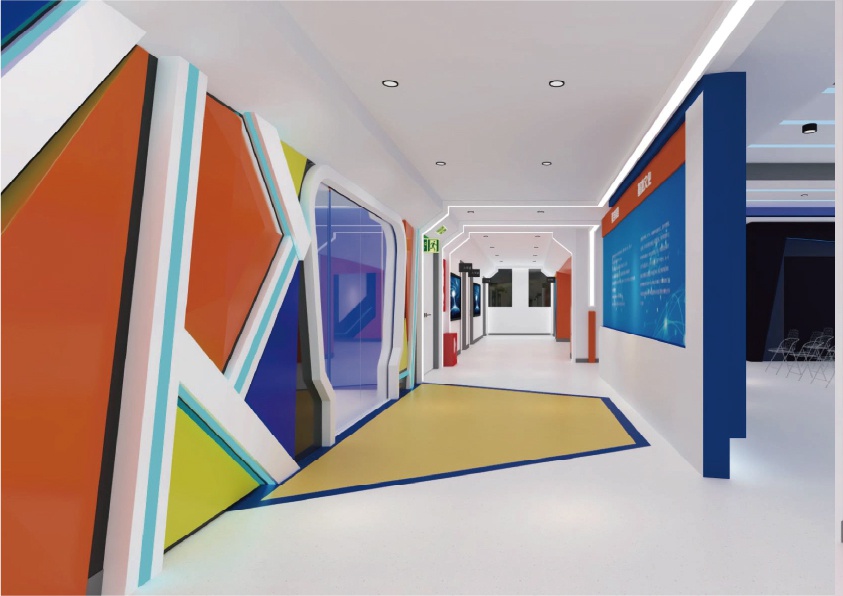

I. Three major pain points of traditional school history displays
Static display: piled up with pictures and text, lacking circulation design and interactive experience.
Severe homogenization: all venues look alike, making it difficult to reflect the school's unique cultural heritage.
Low utilization rate: Teachers and students are unwilling to visit voluntarily, making it a "one-time" project.
II. Four Breakthrough Directions for Modern School History Museum Design
1. From "Displaying History" to "Telling Stories"
A professional design team will uncover key milestones, key figures, and turning points in the school's development, constructing a compelling narrative with a clear beginning, development, climax, and resolution. For example, they can string together the founder's educational ideals, breakthroughs in key scientific research, and distinctive teaching reforms into a vivid "campus epic."
2. From "two-dimensional display" to "multi-dimensional experience"
Spatial narrative design: guiding emotional changes through visitor flow.
Multimedia integration: AR/VR technology recreates historical scenes
Interactive installations: Touchscreen timeline, sound and light sensor exhibits
Scene recreation: Restoring important historical scenes or laboratories
3. From "one-way communication" to "two-way dialogue"
Modern school history museum design emphasizes visitor engagement:
Set up an alumni message and interaction wall
Develop supporting online mini-programs to extend the user experience
Design "check-in" spots that are easy to photograph and share.
Regularly update the temporary exhibition area to keep it fresh.
4. From "Cultural Display" to "Brand Building"
An excellent school history museum should serve as a visual expression of the school's brand, maintaining consistency with the school's overall visual identity in terms of color scheme, logo design, and spatial style, thereby enhancing brand recognition.
III. Key Implementation Steps of Professional Design
Phase 1: In-depth Cultural Exploration
Professional teams such as Shanghai Culture Planning will conduct the following in the early stages of a project:
Systematic sorting and digitization of school history materials
In-depth interviews with key figures
Extraction of the characteristics of campus spirit
Differentiation analysis of competing schools
Phase Two: Innovative Concept Design
Shanghai Design Team excels at translating cultural essence into design language:
Extracting core design concepts and visual symbols
The exhibition is planned to be "must-see, worth seeing, and visually appealing".
Balancing historical weight with modern aesthetic demands
Considering the viewing needs of different audiences
Phase Three: The Integration of Technology and Art
The practice of Shanghai's campus culture design shows that the application of technology should serve the content:
Choose appropriate interaction technologies to enhance the experience.
Control the "degree" of technology use and avoid excessive showing off.
Ensure the ease and sustainability of exhibit maintenance.
Balancing online and offline experiences
IV. Quantitative Evaluation: Five Indicators of an Excellent School History Museum
Visitor participation: Annual visitor numbers and length of stay data
Educational Impact: Whether it should be included as a compulsory part of freshman orientation?
Social media sharing: spontaneously shared photos and reviews of the activity.
Cultural identity: Related ratings in teacher and student satisfaction surveys
Brand enhancement power: the degree of positive change in visitors' impressions of the school
V. Industry Insights: Future Trends in School History Museum Design
Digital Twin: Building a Digital School History Museum Corresponding to the Physical Museum
Content is updated dynamically: A mechanism for the continuous collection of school history materials has been established.
Community-based operation: Encouraging faculty, students, and alumni to participate in content co-creation
Cross-disciplinary integration: more closely integrated with curriculum teaching and research presentations
Professional advice: How to launch a successful school history museum project
Define the core positioning: Determine whether the school history museum primarily serves recruitment, alumni communication, on-campus education, or is open to the public.
Choosing a professional team: Examine whether the design company has a complete portfolio of campus culture design projects, especially their depth of understanding of educational institutions.
Establish a collaborative mechanism: Form a project team composed of school leaders, alumni representatives, faculty and student representatives, and professional designers.
Long-term operational planning: The feasibility of subsequent content updates, equipment maintenance, and event implementation should be considered during the design phase.
A school history museum should not be the "final project" of school construction, but rather the "starting point" of cultural development. A school history museum created by a professional team, such as the works presented by Shanghai Campus Culture Design, can truly achieve three major transformations: from a cost center to a value center, from a historical warehouse to a cultural living room, and from passive visits to active experiences.
In today's increasingly competitive campus culture landscape, school history museums have become a key indicator of a school's cultural soft power. Investing in professional design is investing in a school's cultural heritage, brand influence, and community cohesion. Letting professionals do what they do best, ensuring that history is not only preserved but also perceived, disseminated, and passed on—this is the core essence of modern school history museum design.